
As a parent, I’ve seen my child develop school trauma resulting in Emotionally Based School Avoidance (EBSA) otherwise known as school refusal or emotionally based school non attendance (EBSNA). Even just writing this, highlighted how much SEND parents have to learn to ensure their child gets the right provision, even learning the law.
I’ve watched my child being sociable with a great group of friends to barely leaving the house and in a constant state of dysregulation. Battling school with the dreaded comment that “He’s fine when he’s here”. Being turned down repeatedly by CAMHS until eventually being put on a ridiculously long waiting list (still on a year later). Getting support from the crisis team but they only offer two sessions before discharging your child. Needing to take the Council to tribunal to get the right provision and every step of the way seems like a battle rather than working in the child’s best interest.
I know from research that parents going through this can end up with PTSD. I’m not surprised with my experience of being gaslight or ignored, feeling that the your parent voice is not valued like the professionals voices despite knowing your child better than anyone in the room.
* If you are worried about your child’s declining mental health, please contact the GP/ CAMHS/ the crisis team or A&E if it’s an emergency. There are apps like Hub of Hope or StayAlive, which may provide additional advice. Text SHOUT to 85258 for 24/7 mental health text support.
What if they keep playing the same games on repeat?
This could be monotropism, which is a completely normal way for autistic, or hyperfocus for ADHD, individuals to focus. This is something that they are unable to do in mainstream UK education with regularly changing lessons or activities.
Or repeating the same play could be a trauma response, therefore by keep replaying the game it provides and highlights something internal needing processing. Often by having someone with them, following their lead, they can keep playing until some resolution feels right for them. You may never know what they’re processing, and they may not have the words for it either, but it’s still ok.
What if they don’t want me to play with them?
It needs to be their choice, but maybe keep offering.
One option is that you could start playing a game they like on your own either to learn about it or to see if that gets their interest by seeing you online. You could be near them, in a comfortable distance for them or in a different room.
Gaming
If your child likes gaming, like mine, then this can be a great resource for their mental health, connection and a lifeline. You don’t need to be an avid gamer, I would not describe myself a gamer, my previous experience was as a teen playing Mario Kart, Tetris and badly attempting Mortal Kombat at university! This is about joining your child where they are with their interest, even in a virtual online platform.
There are some themes that I’ve found with EBSA, particularly with autistic children unable to access the school environment, although not all will apply to every child:
Safety. Not feeling safe, needing to be in their safest place or fearful of loosing their safety. They could be physically safe but they don’t feel safe.
Control. This could be particularly important for PDA. Generally when we’re wanting more control it is because we’re feeling a lack of it so overcompensate. Also, children in school are constantly told what to do, where to sit, the topics they have to learn. They can’t even listen to their own body for when they need to use the toilet, as they can only use them at set times. Therefore, use this time so that they can take control and lead the play (unless you’re playing with siblings, as well, then that can get tricky with meeting different needs).
Needing to keep everything/ buy everything/ want everything. This is not from a place of being spoilt, but could be from experiencing their needs not being met and so trying to compensate for that feeling.
Needing to win or be the best. This could be from feelings of failure: other children were surviving in school so why couldn’t they? Maybe they struggled academically without given the right support? Or lacked sensory adaptations like movement to be able to focus?
I’m focusing on two main games that I played with my children but the ideas/ concepts can be applied to different ones. Research shows that gaming can help mental wellbeing through feelings of competence, mastery, connecting with others and meaningfulness. For any games, the idea is to follow your child’s lead, their choice of play. There may be some therapeutic connections you could suggest, but your child needs to agree for it to be affective.
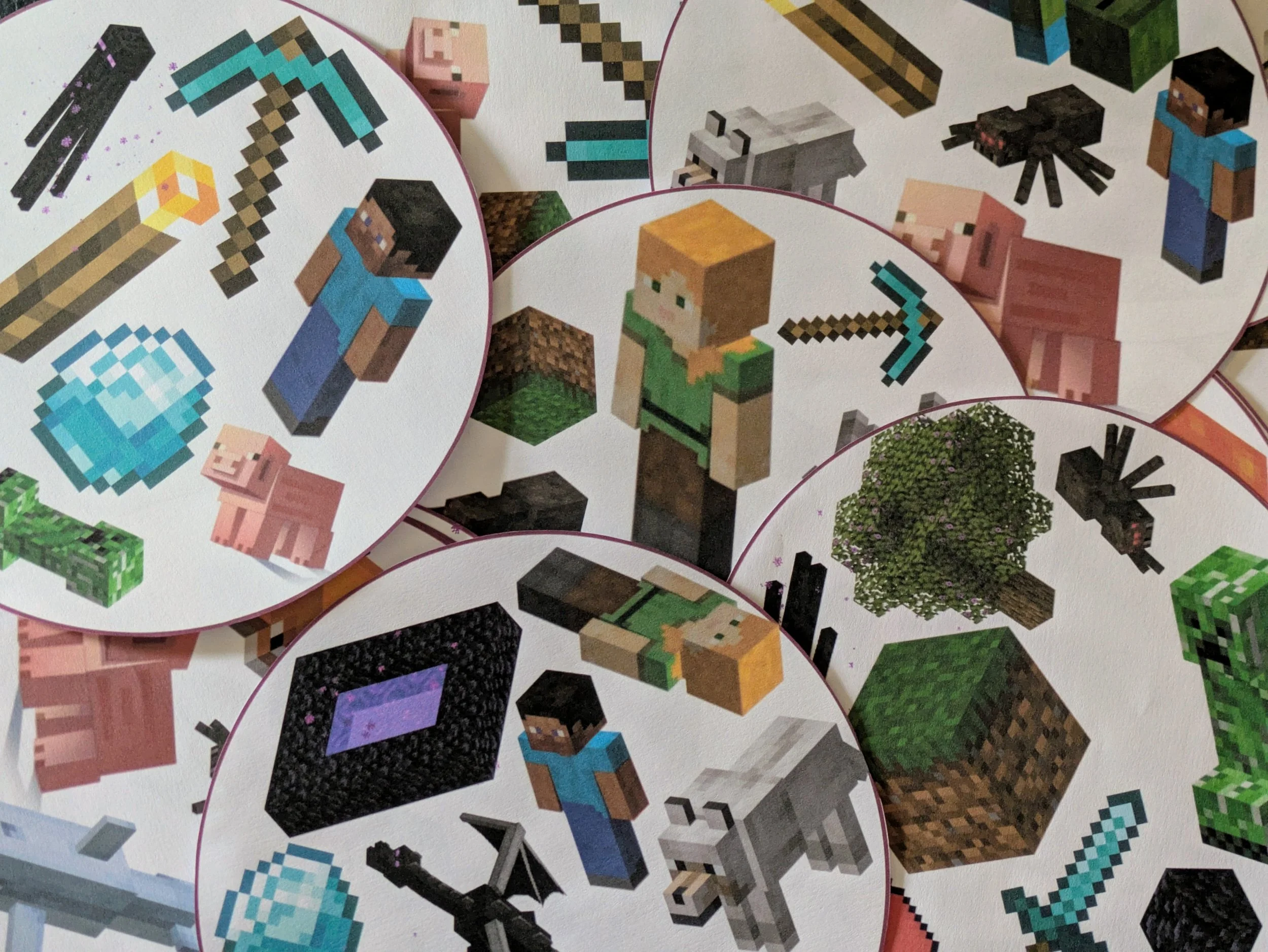
Minecraft
I think Minecraft is brilliant and can be really useful as a therapist and parents. This can be played in creative, which a focus on building, or survival mode. There are different options of peaceful, easy, normal and hard; this affects whether you can be attacked by mobs.
Safety is a key theme for Minecraft (particularly in survival mode but even creative). This could be done by making a base, castle, even designing your own ‘backrooms’ or building a home made out of Obsidian, which is the strongest block on Minecraft. Maybe storing all their special items inside, like their weapons, tamed dogs or even you. This can also be seen in needing the strongest, most powerful weapons and armour.
Fighting mobs, such as creepers, skeletons or zombies, which would attack you or killing peaceful mobs like cows and sheep to get vital items.
Or on a journey together in survival mode collecting all the items you need to make it through the night, find diamonds or complete a quest your on.
Roblox
There are a variety of games on this platform. But the main aspect of playing with your child on here is on their mastery and feeling able to complete/ do the game.
Frustrations are likely to come up and due to their school trauma or autistic burnout, this may be too difficult for them to sit with. You may want to look into getting private servers, which sometimes costs money, so they can play the game without others stealing their items. Maybe consider boundaries around which games are suitable or accept that they may choose some games which are triggering.
Many games follow the same idea of trying to get the best stuff, such as Grow a Garden getting the rarest plants or Steal a Brainrot collecting rare Brainrots.
Animal Hospital Anomaly, Anomoly Cafe or Survive 99 Nights all involve looking out for danger and teamwork.
Other games involve battling to win such as fighting games like Rivals or Knockout, or alternatively Dress To Impress or any type of Obby, where they may insist on being the best.
Brookhaven is based on reality in a town, which gives them control to choose their home or drive a vehicle. This could cover safety, competition with car races, needing control or needing everything by robbing the bank. This also gives a chance for role reversal, as they could be the parent and your the child, they may take to school, a jail cell or the cafe!
There are no quick fixes for EBSA or school trauma but moments connection with your child can either help current dysregulation or provide a one small step to recovery.
(Whatever recovery means for your child. I don’t think it’s about returning to their old selves but working on a new version of them. With a better understanding of themselves and their needs)