
Darts in the therapy room!
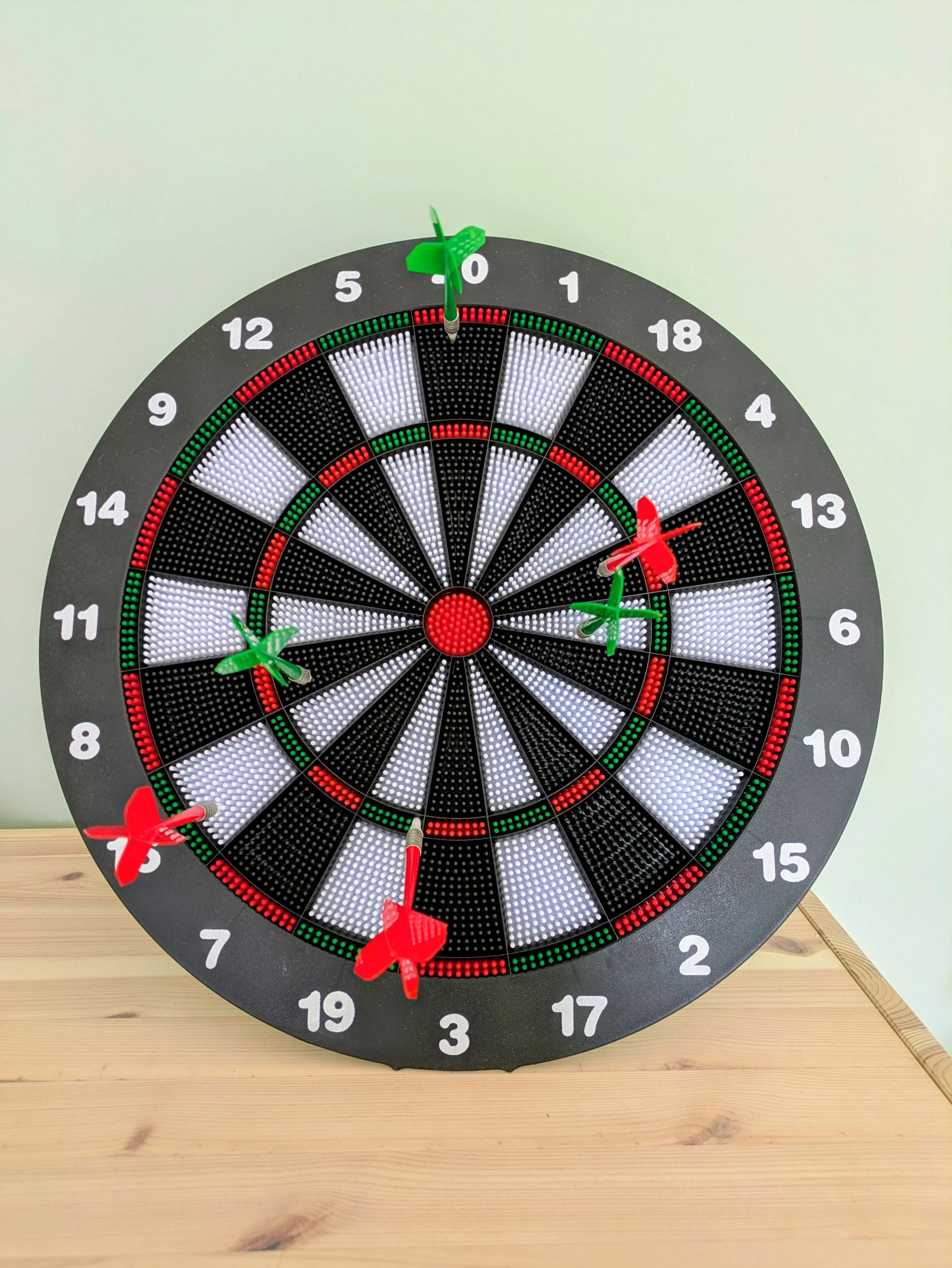
Soft tip dart board in a therapy room
It occurred to me that often in counselling and psychotherapy rooms, they have a seemingly random selection of items, even more so for children’s mental health therapy. I thought I’d explain some of the reasons below for my dart board:
Darts can be fun. Counselling and psychotherapy can be hard work, particularly when processing some painful life experiences. Adults can usually understand the emotional rollercoaster of therapy, knowing that the end goal is more self understanding and peace or feeling lighter. However, children may not grasp this idea. Therapy for children needs to include an element of fun and enjoyment. Another reason for this with children is the difference between adults usually being the ones to decide for themselves to attend therapy, which often isn’t the case for children and young people.
Movement. Throwing darts requires some movement and force, particularly to get these soft tip darts to stick in the board. Movement is great in counselling and psychotherapy, called Somatic Therapy, it can help release pent up emotions and develop a greater connection between the mind and body. Also sometimes sitting for 50 minutes is just too intense and the body is calling for some movement.
Relationship. A key element of counselling and psychotherapy is the relationship. Playing games or activities can help develop this therapeutic relationship. A successful therapeutic relationship can help to ease relational trauma, this could include unhealthy relationships, bullying, feeling misunderstood in communities and groups.
Therapy helps us understand ourselves better. Do we become really competitive? Avoid any competition by not scoring? Feel nervous and avoidant about playing darts in the first place? There is no right or wrong way. Counselling and psychotherapy can help to look into how we react and the possible reasons for this, then consider whether it’s something we like about ourselves or maybe to change.
Neurodivergence. This is a fast paced activity, which provides instant dopamine rewards by throwing and then seeing where the dart lands, this can be enjoyable for an ADHD person. Focusing on an activity rather than the other person can ease social anxieties, particularly useful for an Autistic person. The actual movement of throwing the dart is a repetitive motion, which can feel relaxing.